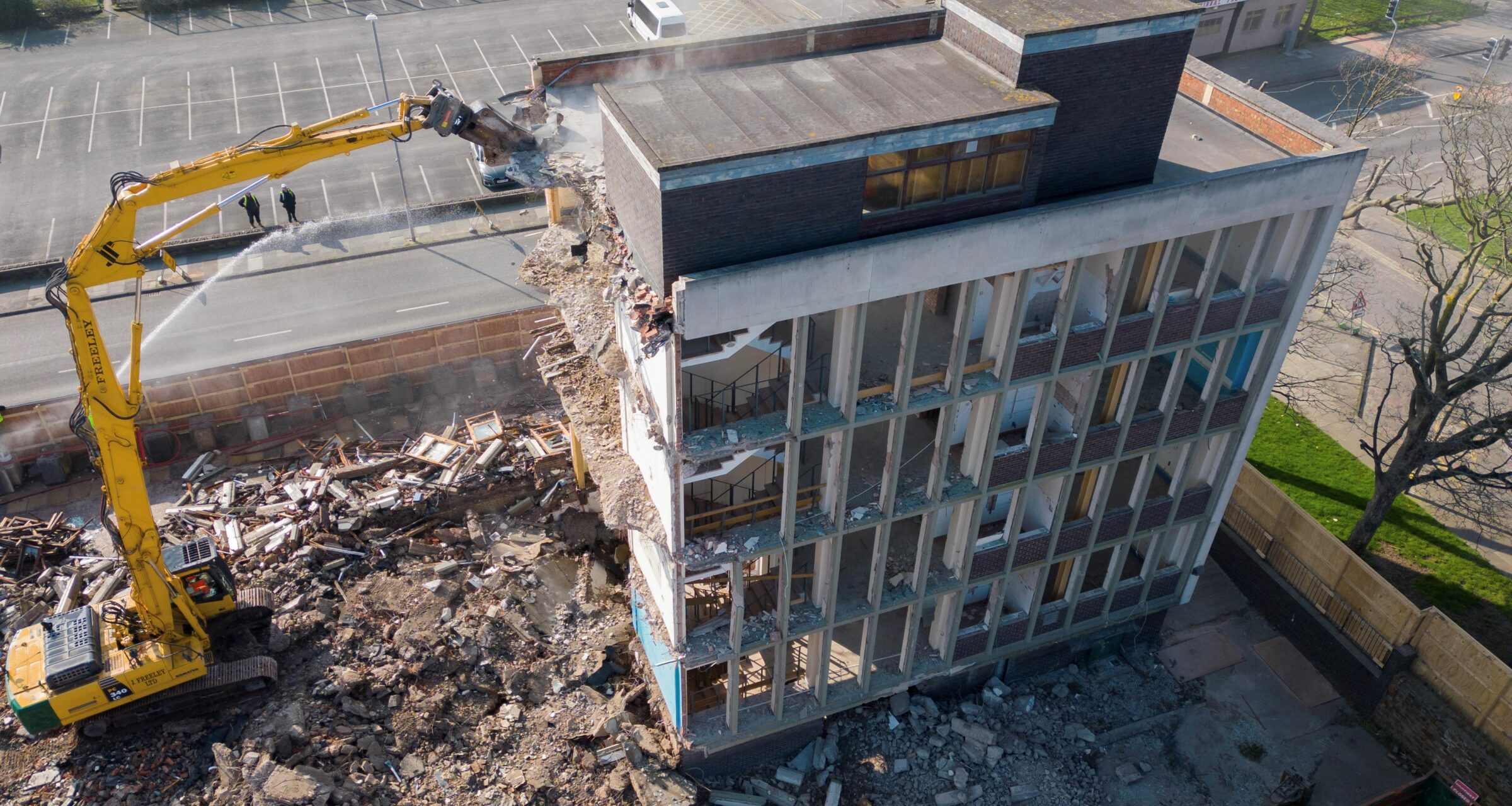
Demolition isn’t just about knocking buildings down. It’s a highly skilled, carefully managed process that relies on detailed planning which begins before a tender is issued. Uninformed decisions and inadequate preparation can add time, cost and risk to projects of all sizes. So here are my thoughts on the most common pitfalls of demolition projects and how clients can avoid them.
Surveys and services: start early
The earlier that surveys and service disconnections are addressed, the lower the risk of delays and unexpected costs. This is particularly relevant for organisations who are commissioning demolition projects for the first time.
Before going out to tender, clients should complete all relevant surveys, including asbestos and ecology, and ensure service disconnections are in progress or completed before the demolition start date. Surveys commissioned late can uncover issues that need further investigation or mitigation which will add delay. Service disconnections, particularly on larger or more complex sites, can take two to three months, so significantly extending the programme.
Although a demolition contractor can arrange all these surveys on the client’s behalf, completing them in advance provides greater programme certainty, enables more accurate pricing and allows projects to progress faster.
Contractor selection: the most overlooked risk
One of the greatest sources of hidden cost is also one of the easiest to avoid.
Some organisations are still prioritising the lowest cost tender over competence and quality. Unfortunately, this often stems from the misconception that demolition is low-skilled work, resulting in procurement teams underestimating the complexity and technical expertise involved. It’s not uncommon to see tender lists that include scrap merchants with no demolition experience.
Selecting a contractor on price alone can compromise every stage of a project, which can lead to safety issues, delays, spiralling costs and reputational damage.
In the long run, it’s always more economical to appoint a competent, experienced contractor. Clients should look for membership of the National Federation of Demolition Contractors (NFDC) as well as recognised accreditations, including ISO 9001, 14001 and 45001, which demonstrate robust quality, environmental, and health & safety systems.
Relevant experience is equally important. Every demolition project presents unique challenges, driven by the structure, location, environmental factors and client requirements. Contractors should be able to demonstrate a proven track of record in successfully delivering projects of a similar scale and complexity.
Financial stability together with suitable insurances should also form part of the assessment, reducing the risk of potential project delays or incomplete works.
Contract terms: get the balance right
Contracts that transfer all risk to the demolition contractor can lead to lengthy negotiations and result in capable contractors walking away. This frequently occurs when demolition projects are procured using contracts developed for major construction works.
A more balanced approach benefits both parties. Using standard forms developed specifically for demolition, such as those produced by the NFDC, ensures greater clarity and helps projects start more quickly.
Site logistics: getting the practicalities right
Successful demolition depends on safe access, sufficient working space and carefully planned movements but practical considerations such as road closures and loading areas, can often be treated as an afterthought.
Identifying these constraints early and working collaboratively with the contractor to understand the site’s operational requirements, helps ensure the project is delivered safely and efficiently.
The bottom line
The hidden costs of demolition rarely come from dramatic, one‑off events; they are more likely to emerge from everyday decisions made during planning and procurement. With the right preparation and knowledge, many of these risks can be avoided altogether.
Demolition should be recognised as a specialist discipline that demands the same level of planning, expertise and professionalism as any other construction activity. Clients who take this approach are far more likely to achieve safer projects, greater programme certainty and better value in the long run.