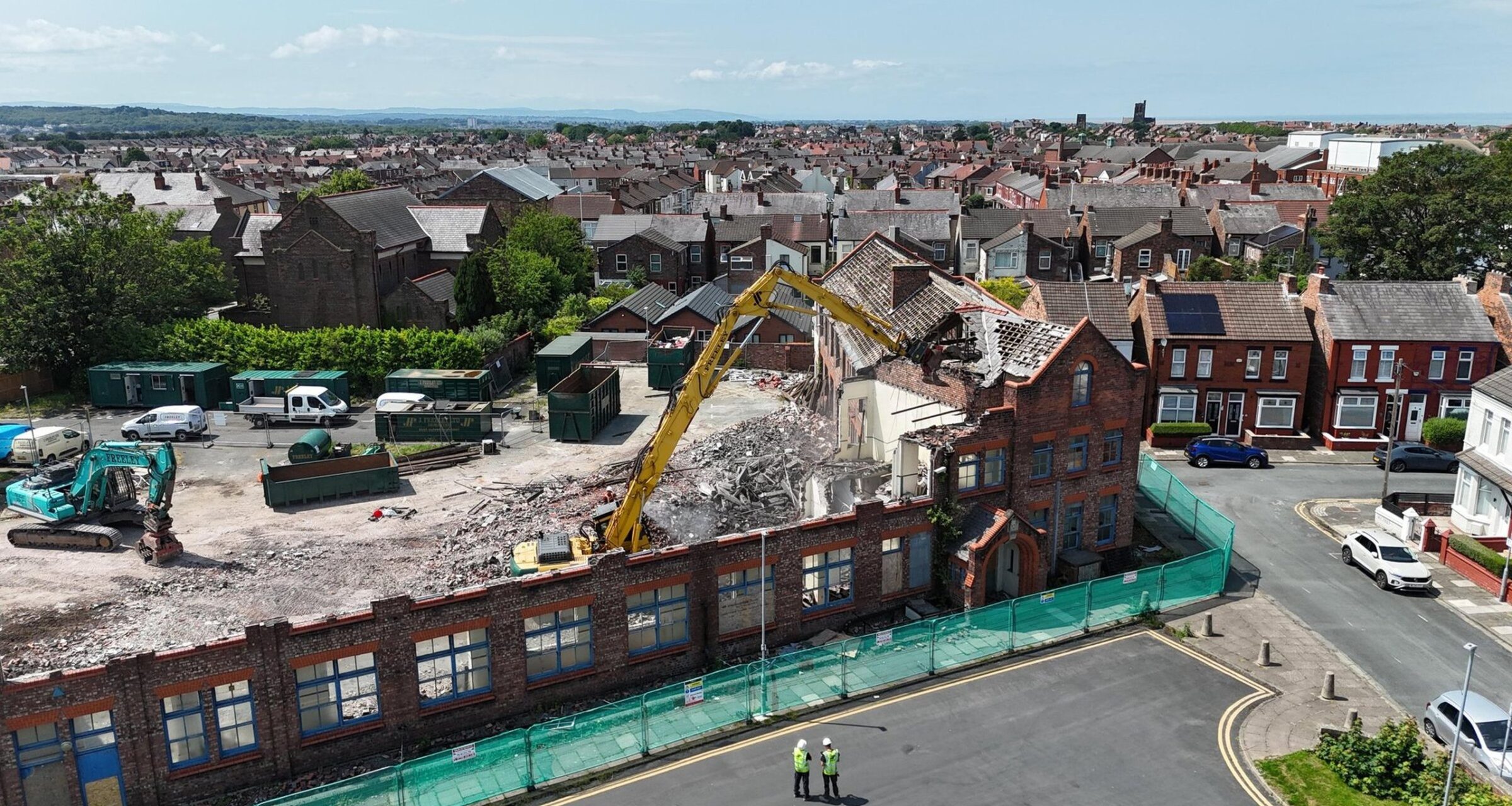
Michael Freeley discusses what quality really means in demolition, the importance of competence checks and how clients can minimise risks.
When it comes to demolishing buildings rather than constructing them, quality can be much harder to define. The condition of a cleared site is often seen as the primary measure of success, and while this is an important factor, it only tells part of the story.
How the work is delivered from start to finish is what truly defines a quality demolition project. After all, a site may look immaculate at handover, but if the project has been overshadowed by a safety incident or community disruption, that is not a job well done.
What quality really means
To understand what quality means in demolition, several factors should be considered.
First and foremost, the work must be carried out safely, on time, and within budget. Careful planning, coordination and risk management are essential to ensure the project runs smoothly, with no surprises along the way. Clear, consistent communication with the client and design team underpins this process and helps maintain trust from day one.
Effective engagement with the local community is just as important. There are two strands to this approach. The first is proactive communication to keep those affected by the works informed, minimise disruption, and ensure local residents and businesses are satisfied with how the project is being handled.
The second goes a step further to make a positive difference that extends beyond the project. This could be achieved in various ways, such as using local suppliers, creating job opportunities, offering careers advice, or making charitable donations.
Finally, the project should conclude with a cleared site that reflects the contractor’s attention to detail and professionalism. This means leaving the area clean, safe and professionally presented, ready for the next stage of development. If a site is not finished to a high standard, this can lead to problems further down the line, including the risk of contamination.
When all these elements come together, the result is a demolition project that exemplifies quality in every stage of its delivery.
Why competence matters
The Building Safety Act has underlined the importance of competence in construction and demolition is no exception. Selecting a competent demolition contractor is not just key to achieving quality – it is a legal requirement.
Faced with a long list of potential firms, it can be tempting for clients to opt for the lowest price when tendering, but this can prove costly in more ways than one.
Unfortunately, our industry still suffers from substandard contractors that lack the expertise, training, or financial stability to deliver a project safely and efficiently. Projects awarded on price alone often end up in the hands of these companies, compromising quality at every stage. This can lead to safety issues, delays, spiralling costs and reputational damage.
In the long term, it is invariably more economical to appoint a reputable, competent contractor, minimising potential risks from the outset.
Making an informed decision
When tendering, researching several key criteria will help to identify competent contractors.
The first step is to check for membership of the National Federation of Demolition Contractors (NFDC) as this is one of the clearest indicators of competence. Independent accreditations also matter, including ISO 9001, 14001 and 45001, which together demonstrate robust quality, environmental, and health & safety systems.
Relevant experience is another critical consideration. This may sound obvious but too often contractors are appointed without having demonstrated their capability on comparable projects. Every demolition contract presents its own unique set of challenges, shaped by the structure, location, environmental factors and client requirements. It is therefore vital to select a contractor with a proven track record in delivering similar schemes safely, efficiently and to the highest standard.
Financial stability together with suitable insurance are equally important to reduce the risk of delays or incomplete works.
Holistic thinking
Demolition is not just about tearing down structures and clearing sites. It is a high risk, technically-demanding discipline that requires specialist experience and skills. Every project should be completed safely, responsibly and with both the client and local community in mind.
Clients that recognise this, and take the time to appoint a competent contractor, will see the difference in every stage of the project, regardless of its size or complexity. That is what quality in demolition really looks like.